Building
"
Our time in medicine is finite. Our contribution to it need not be.
"
- Miri Lader, MD. |
" Our time in medicine is finite. Our contribution to it need not be. " - Miri Lader, MD. |
Why Build
Early in my career, I recognized that my sense of responsibility extended beyond caring for the patients in front of me. I also felt a responsibility to the profession itself, and to leaving it better than I found it. After all, this was never mine to keep. I inherited medicine from those who came before me, and I must hand it off safely to those who come next. I have been entrusted with something larger than myself, and while it is in my hands, I feel called to strengthen it.
Three principles shape how I approach the work of building something better.

Imagining What Could Be
I am naturally drawn to the space between what exists and what might be possible. Sometimes that means recognizing a problem that needs to be solved; other times, it means seeing an opportunity that has not yet been imagined.
I have never been particularly comfortable with the idea that a process should continue simply because it is the way things have always been done. Some of the work I am proudest of began with relatively simple questions: Why do we do it this way? Who is being left out? What would make this safer, clearer, or more effective? Those questions have led me into quality improvement, curriculum design, educational systems, and institutional leadership.
That instinct has taken different forms throughout my career. In the hospital, it has meant helping create a structured nighttime huddle between nurses and residents to strengthen communication and situational awareness, and noticing that rotating medical students had been inadvertently excluded from emergency hospital alerts because the existing system was designed around employee status. In medical education, it has meant examining the gap between the curriculum we provide and the responsibilities learners are actually preparing to assume, and building new approaches to help close it.
The scale of these changes has varied considerably, but what has remained constant is the habit of looking at an existing system and asking not only, “Is this working?” but also, “What else might be possible?”
Building With People
Because ideas may begin with one person, but meaningful change rarely does.
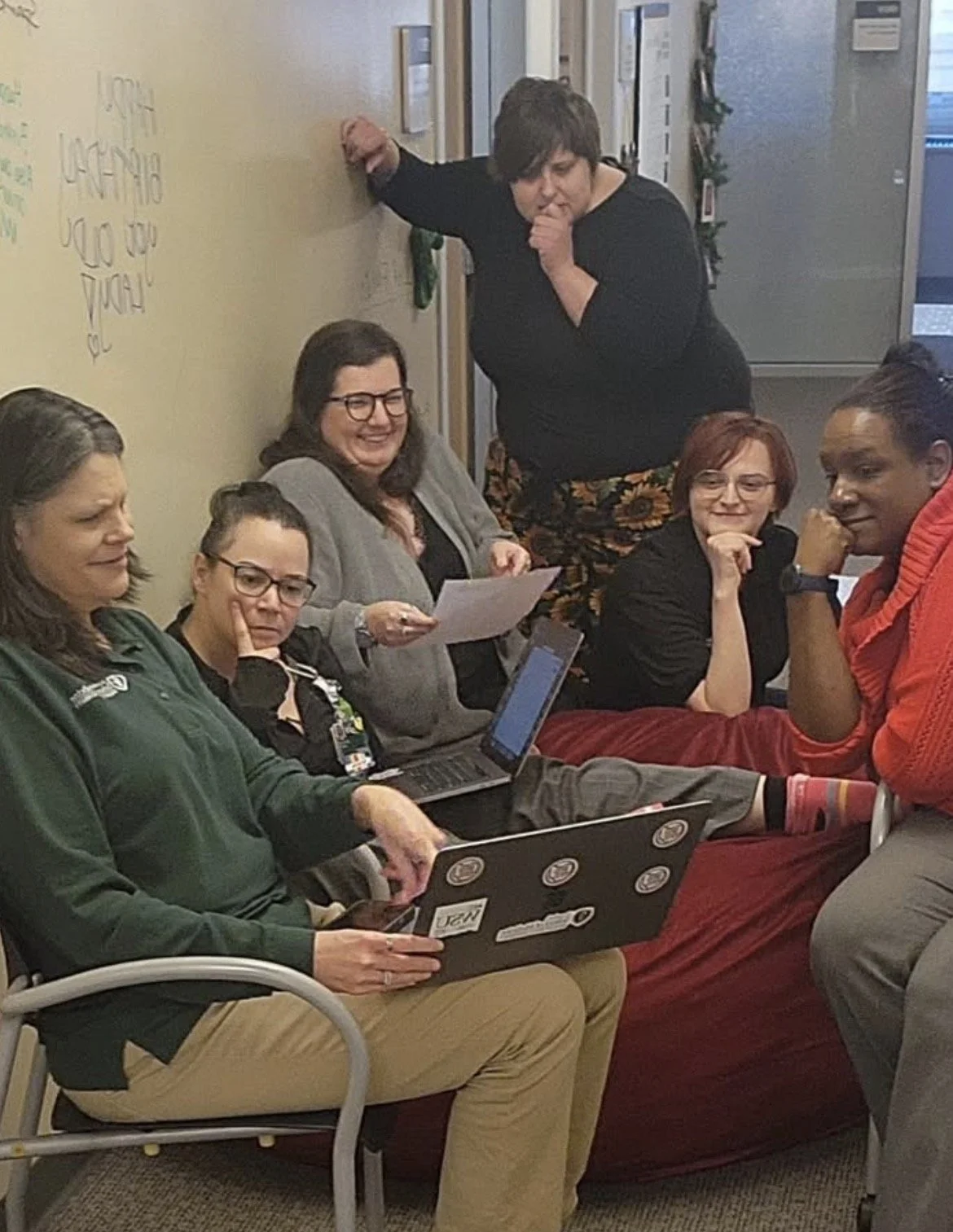
I have learned that the strongest systems are not simply designed for the people who will inhabit them; they are built with them. That requires listening before deciding, understanding where perspectives differ, and creating enough shared purpose that people can move forward together without necessarily seeing every problem in exactly the same way.
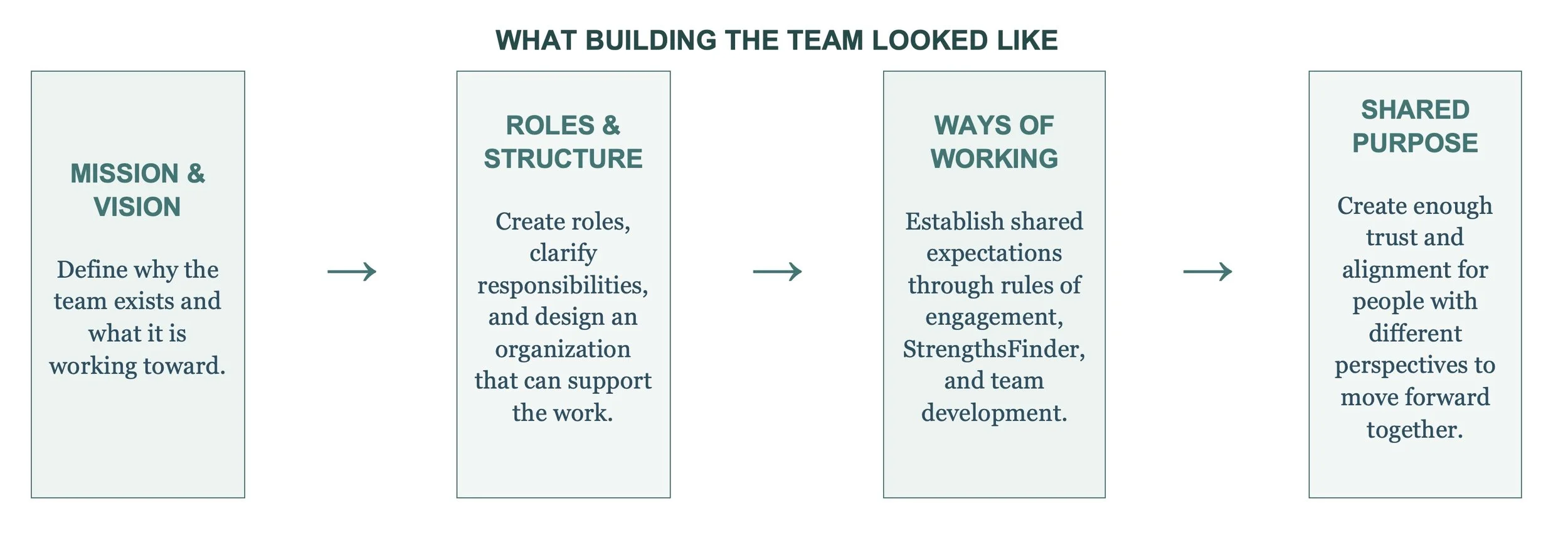
From philosophy to practice
Some of my most meaningful leadership work has centered on building that kind of environment. While leading a growing student-affairs operation, I helped rebuild and expand the team, creating new roles, clarifying responsibilities, redesigning the organizational structure, and bringing staff together to define a shared mission and vision where none had previously existed. I developed staff-development retreats around team building, StrengthsFinder, rules of engagement, and the deliberate work of understanding how we wanted to function together, not simply what we needed to accomplish. Ultimately, building the structure is only part of building the system.
The relationships, trust, and sense of shared ownership within a system matter just as much as its structure. My role as a leader is not to have every answer. It is to create the conditions in which people feel confident and safe to bring what they know, challenge what needs challenging, find alignment where possible, and build something stronger together.
Preparing What Others Will Inherit
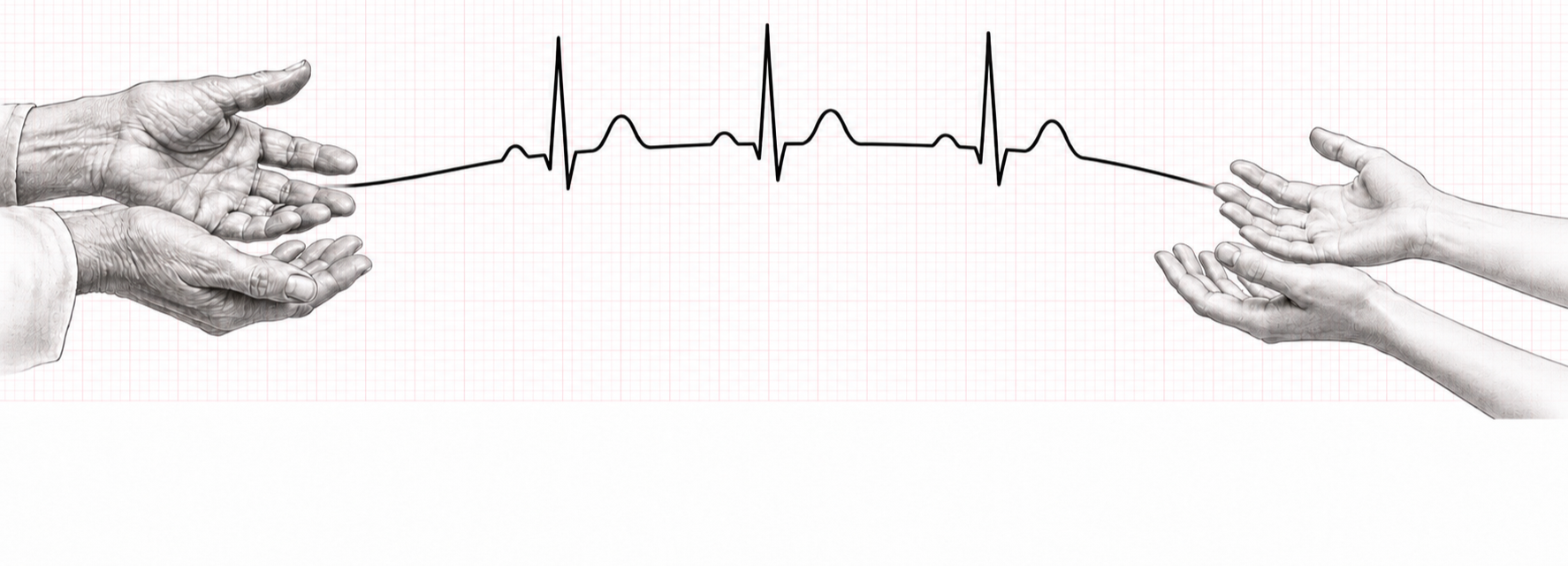
The longer I spend in medicine, the more conscious I become that much of what shapes our profession was built by people we will never meet. We inherit their knowledge, systems, educational traditions, professional standards, and ways of caring for one another and our patients. Some of that inheritance deserves to be protected. Some needs to evolve. And some leaves space for us to contribute something entirely new.
For me, stewardship does not mean simply preserving what I received. It means taking responsibility for what happens to it while it is in my hands. I want the curricula I develop to prepare physicians more thoughtfully, the systems I improve to function more safely, the teams I help build to remain stronger, and the ideas I contribute through scholarship to continue provoking thought beyond the moment in which they were written.
I also believe there is room for ambition within stewardship. I hope to contribute something sufficiently meaningful so that some part of medicine is different because I was here. That may be an idea another physician carries forward, an educational approach that outlives my involvement, a system that continues serving people I will never know, or a learner who practices differently because of something we explored together. I do not yet know which contributions will endure, but I believe deeply in the pursuit itself:
to leave behind work worth inheriting.
One idea I hope to contribute to that inheritance grew from my scholarship in medical ethics and professional identity. In examining physicians' participation in medicine under National Socialism, I became increasingly interested not only in what physicians should know and do, but in how they preserve the capacity to determine what is right when professional, institutional, or societal expectations begin to shift. That work led me to develop the concept of Conscience Independence, a capacity I believe medical education must deliberately cultivate.
__________________________
Conscience Independence
“The physician's sustained ability to preserve independently functioning ethical judgment through deliberate, habitual self-reflection. Such independence requires continually recalibrating that judgment as professional, institutional, and societal expectations shift, and exercising it through principled action when those expectations conflict with conscience.”
__________________________________________